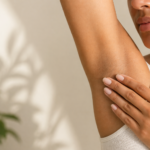
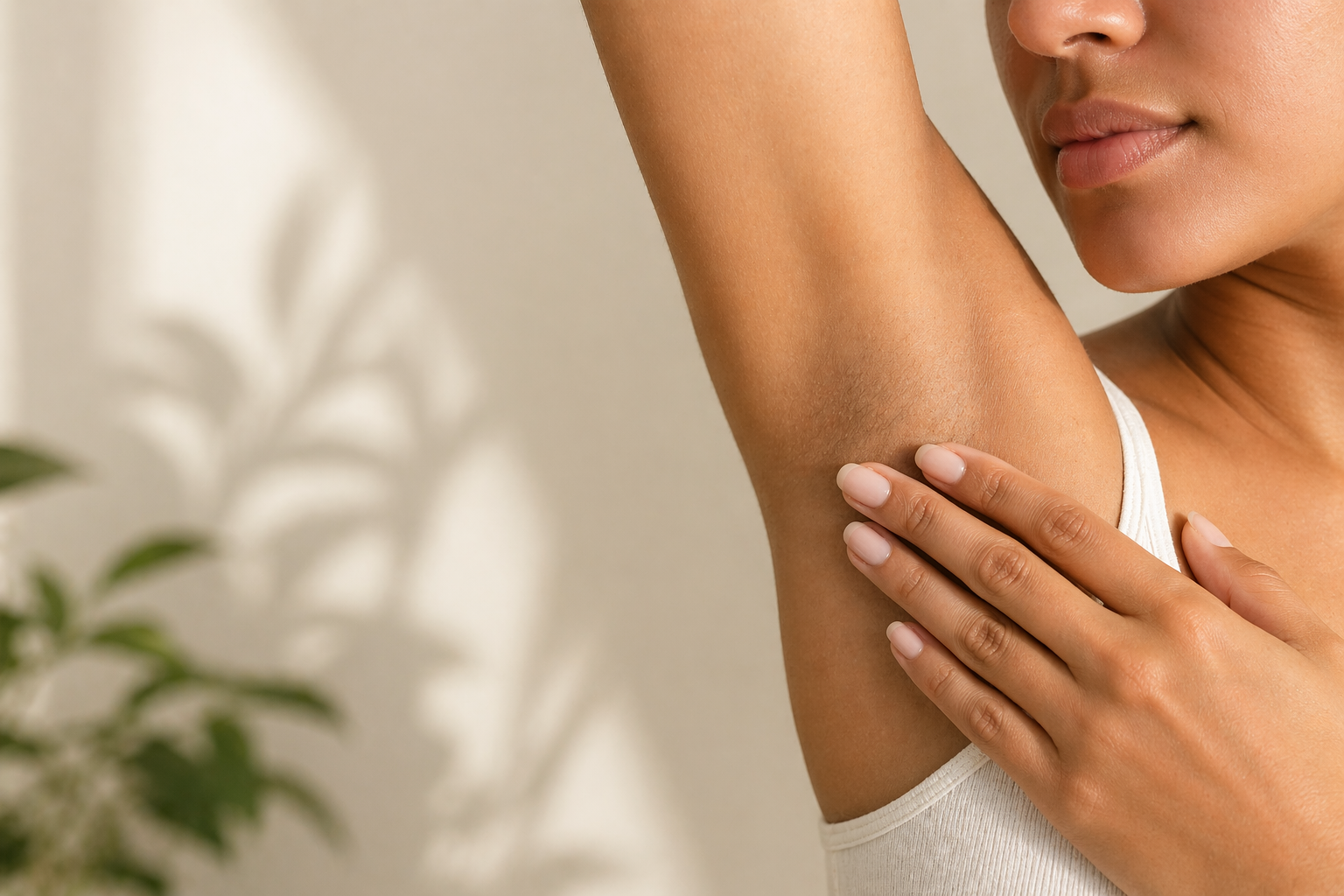
Dark underarms are incredibly common—but the way most people try to treat them is exactly what keeps the problem going.
If you’ve been scrubbing, over-exfoliating, or layering harsh products…
you may actually be making the discoloration worse.
As a dermatologist, I approach underarm darkening differently.
Because this isn’t just a pigment issue.
👉 It’s a pigment + inflammation + microbiome issue.
Let’s walk through what actually works.
Why Underarms Get Dark (It’s Not What You Think)
Most underarm discoloration is due to:
- Repeated irritation (shaving, friction)
- Inflammation → triggers melanin production
- Bacterial overgrowth (folliculitis)
- Product sensitivity (especially deodorants)
This leads to post-inflammatory hyperpigmentation (PIH)—especially in richly pigmented skin.
The Smarter Treatment Strategy (Dermatologist Approach)
Instead of aggressively “lightening,” we focus on:
- Reducing inflammation
- Controlling bacteria
- Gentle exfoliation
- Targeted pigment correction
This layered approach is what actually creates lasting improvement.
Step 1: Prevent Folliculitis + Buildup
One of the most overlooked causes of dark underarms?
👉 Chronic low-grade folliculitis
This is where antibacterial support comes in.
✔ Option 1: Benzoyl Peroxide Wash (10%)
Using a benzoyl peroxide cleanser (like PanOxyl) a few times per week can:
- Reduce bacteria
- Prevent ingrown hairs
- Decrease inflammation
💡 Especially helpful if you:
- Sweat heavily
- Have acne-prone skin
- Shave frequently
✔ Option 2: Hypochlorous Acid Spray
This is one of my favorite underutilized tools.
- Reduces bacteria
- Calms inflammation
- Supports the skin barrier
You can mist it throughout the day—especially after sweating.
👉 Think of this as anti-inflammatory maintenance for the underarm area
Step 2: Brighten Pigment the Right Way
Once inflammation is controlled, you can safely target pigment.
Look for lightweight creams or serums with:
- Tranexamic acid → helps stubborn discoloration
- Niacinamide → reduces pigment transfer + soothes skin
- Kojic acid → inhibits melanin production
These ingredients work without the irritation that worsens darkening.
💡 Key point:
Heavy creams can occlude and irritate—
👉 lightweight formulations are ideal for underarms.
Step 3: Use Gentle Exfoliation (Not Harsh Acids)
This is where many routines go wrong.
Yes, exfoliation helps—but too much = more pigment.
✔ Best option: PHA (Polyhydroxy acids)
- Gently exfoliate
- Hydrate the skin
- Much less irritating than glycolic acid
👉 This is especially important in sensitive areas like the underarms.
⚠️ What about glycolic acid?
It works—but:
- Can be too harsh
- Can trigger more inflammation in some patients
Step 4: Rethink Your Routine (This Matters More Than Products)
Even the best products won’t work if irritation continues.
Optimize these habits:
- Use a sharp, clean razor
- Avoid dry shaving
- Wear looser clothing when possible
- Switch to gentle, fragrance-free deodorants
What Most People Get Wrong
Let me be very clear:
🚫 Over-exfoliating
🚫 Scrubbing
🚫 Using harsh DIY remedies like lemon juice
These all increase inflammation → which increases pigmentation.
How Long Does It Take to See Results?
With the right approach:
- Early improvement: 3–4 weeks
- More visible brightening: 6–8+ weeks
Consistency is everything.
My Dermatologist Takeaway
If you’re trying to lighten your underarms, don’t just think:
👉 “How do I remove pigment?”
Instead ask:
👉 “How do I reduce irritation and inflammation?”
Because once you fix that…
the pigment often follows.
FAQ
Can I use glycolic acid on my underarms?
Yes—but cautiously. Many people tolerate PHAs better.
What is the fastest way to lighten dark underarms?
A combination of:
- Antibacterial care (benzoyl peroxide or hypochlorous acid)
- Gentle exfoliation
- Brightening ingredients
Why are my underarms still dark even with products?
Ongoing irritation (shaving, friction, deodorant) is often the hidden cause.